Boom Vang Upgrade
From Al Sargent's Top 5 Vanguard 15 Rigging Tips.
A proper vang setup is critical in windy and moderate conditions.
- Windy conditions upwind (Stamasters at 0–3, or 20' 9"–21' 3" of rake): you need to be able to crank on vang tension to induce mast bend and take camber out of the mainsail.
- Moderate conditions upwind (Stamasters at 4–7, or 21' 4"–21' 7" of rake): it's critical to be able to adjust your vang upwind, tensioning in puffs and easing in lulls.
An 8:1 vang setup — one cascade plus the stock blocks — works well. Granted, the Vanguard 15 class rules let you create boom vangs with 12:1 tension (two cascades plus the stock 3:1 blocks). But in practice those are tough to set up right — so an 8:1 vang is a good place to start. If you have the time and patience, set up the 12:1 version — cranking on lots of vang is fast in heavy air; you'll need an extra Harken 404 16mm single block for the additional cascade.
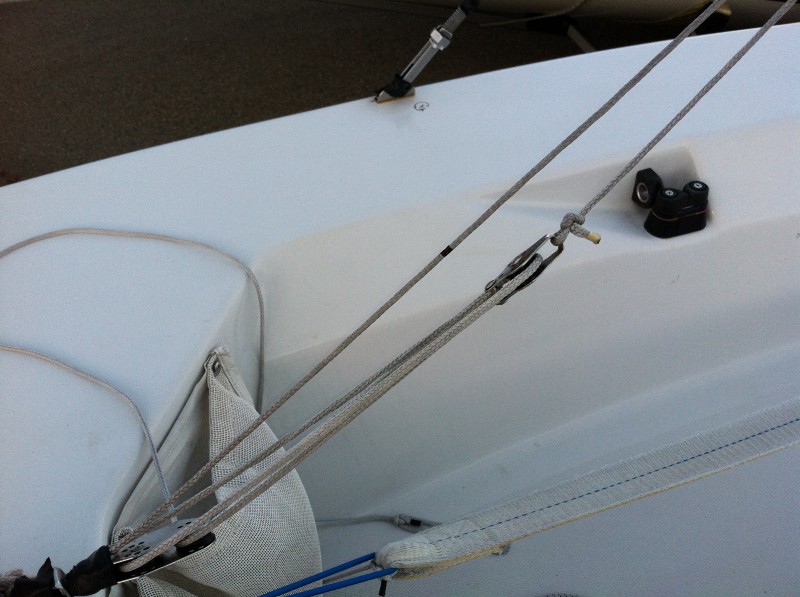
One single piece of 1/8" Spectra, single cascade system. Note the mark on the vang indicating max tight.
What You'll Need
- Wichard D shackle big enough to fit over the boom strap
- Harken 304 38mm wire bullet block (attaches to the Wichard D shackle above)
- 1/8" (3mm) Spectra line, around 20 feet (rope is cheap; when in doubt, buy extra)
- Harken 405 16mm block with becket
- Harken 244 22mm fiddle block with V-Jam
- Ronstan RF78 swivel shackle, attaches to the Harken 244 above
- Wichard D shackle to attach the Ronstan RF78 to the mast
- Zip ties to fasten shackles
- Tool to tighten shackles
- Sharpie waterproof permanent marker
- Electrical tape
Build It Strong Enough to Jibe Loaded
It's important to ensure the vang system is strong enough to withstand heavy-air jibes fully tensioned. You need to be able to confidently throw in a jibe in 25 knots, in a prestart situation when your vang is cranked. The shock loads can be quite high. While it's good to shave weight in some areas, the vang isn't one of those places — weaker "stamped" shackles like those on mainsheet blocks have broken in this application.
Because of this you want strong, forged Wichard shackles. The bottom shackle can be a bit smaller than the upper one, since the upper has to fit over a wide boom fitting.
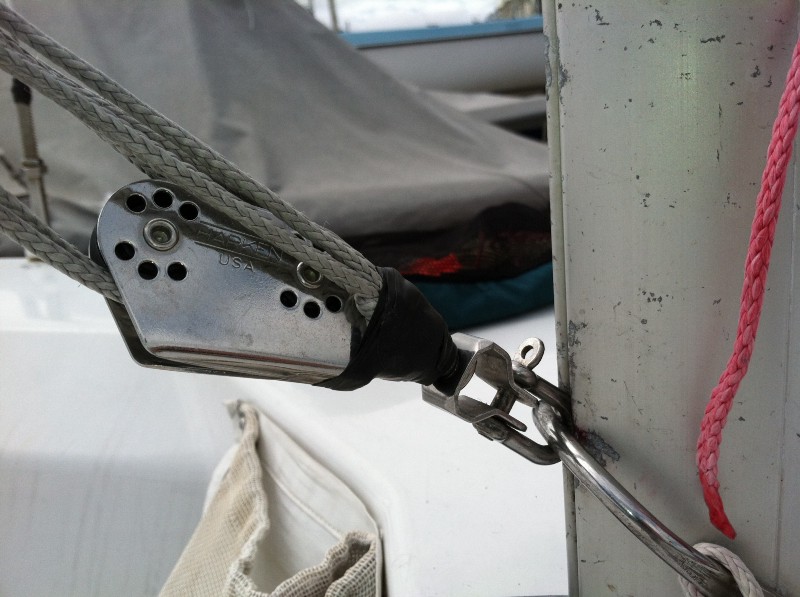
Bottom shackle connected to swivel, all taped. Note the tab on the shackle pin faces up so it won't catch on jib sheets.
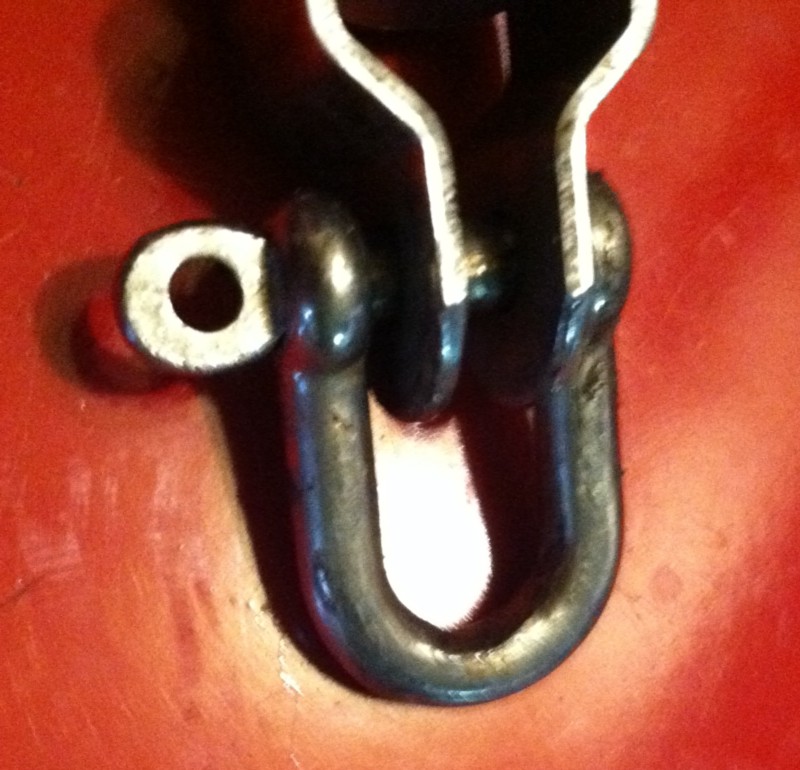
About one millimeter of stainless steel worn away at the bearing point after 50 race days over two seasons. This is why you need a beefy Wichard shackle.
You want a Harken 304 wire bullet block, which has a higher breaking strength than standard Harken bullet blocks. The 304s have a working load of 1,500 pounds, enough to accommodate shock loads on jibes. In contrast, standard wire bullet blocks carry about 500 pounds and Harken Carbos about 330 pounds. Maybe those can handle shock loads — but better not to find out the hard way.
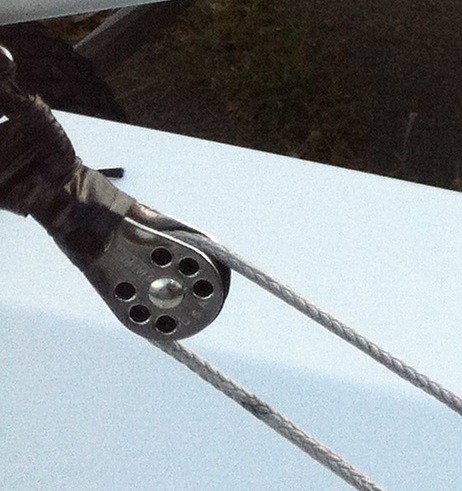
Rigging Steps
- Blocks and swivel: Fasten the Harken wire bullet block to the boom so the shackle pin handle faces up — this makes it less likely to scratch the crew. For the bottom part of the system, have the shackle handle pointing up. This means one less place for the jib sheets to catch in a tack.
- Vang rope: Tie a hitch through the bottom vang block (the one with a cleat) with your Spectra line. Pass one end through the Harken wire bullet block, then down to the stock vang block (the one without a cleat). Tie the line to the vang block with a bowline.
- Adjustment: Adjust the hitch so the upper vang block is about a foot from the bottom vang block with the boom horizontal. This uses less rope (less weight and windage), gives you enough "throw" to really tighten the vang in heavy air without two-blocking, and lets you fully ease the vang so the boat doesn't capsize on the dolly, ramp, or dock.
- Tail: Pass the other end through the turning points on the two blocks, eventually exiting at the cleat. Tie a bowline at the end for the skipper to use while hiking out upwind. The bowline should reach the jib cleat but be no longer — otherwise there's a risk of the vang tail getting sucked into the mainsheet block.
Before starts in moderate conditions (4–7 on the Stamasters / 21' 4"–21' 7" rake), toss the tail of the vang over the starboard side of the hull so you can easily access it coming off the starting line. Many times we've come off the line with the vang eased a bit, for more power in a lull. Then when a puff hits, we crank on the vang and immediately get 3 degrees higher point, start lifting off the boats to leeward and pinching off the boats to windward. Money.
Once everything is set up, crank down the shackles with a tool, then zip tie them shut — you won't have to worry about your vang coming apart all season. Then tape all shackles and ring dings so the crew doesn't get scraped.
Tip: > When you head out with your new vang, mark the line at "max tight" so you can quickly replicate settings before leeward mark roundings in heavy air and focus on hiking.
Originally published on Medium