Shroud Adjusters (Stamasters)
From Al Sargent's Top 5 Vanguard 15 Rigging Tips, tuned for San Francisco's Clipper Cove conditions (10–20 knots, flat water, 2–3 minute upwind legs).
Having your rake adjusted properly is critical for breaking away on the starting line. The stock Vanguard 15 shroud adjusters provide a number of barriers to getting the right rake.
First, they take a long time to change. This makes it hard to try out different settings to find what works best. Evening winds typically start strong and gradually fade as sunset gets closer, making it imperative to reduce rake (rake forward) to put more power into your rig as the evening wears on. Since your race committee may start a new three-minute sequence when the last boat crosses the line, you might have just one or two minutes, up until the two-minute gun, to change your rig.
Second, they're unsafe in windy conditions, because there's a moment when the leeward pin is completely disconnected. If you were to capsize while on port when your shroud is connected, and right your boat on starboard, your rig would fall over.
What You'll Need
- Sta-Master shroud adjusters, along with shorter shrouds
- 2 zip ties to go around the Stamasters
- Wrenches and screwdriver to swap out shrouds
- Sharpie waterproof permanent marker
- Electrical tape or rig wrap (self-bonding rigging tape)
Setup
When you buy Stamasters, you'll need shorter shrouds than what ships with a stock V15. These should measure 14 feet, 0.75 inches (428.6 cm), measured pin-to-pin — from the pin that attaches to the top of the mast, to the pin that attaches to the top of the Stamasters. Also you'll need clevis pins to connect the shrouds to the Stamasters — 13/32" long x 3/16" diameter works well. It's good to have pins that aren't so wide that they'll catch on the crew's clothing or a loose jib sheet. Svendsen's rigging shop in Alameda can make a pair of shrouds, including Stamasters, for around half the price of ordering elsewhere.
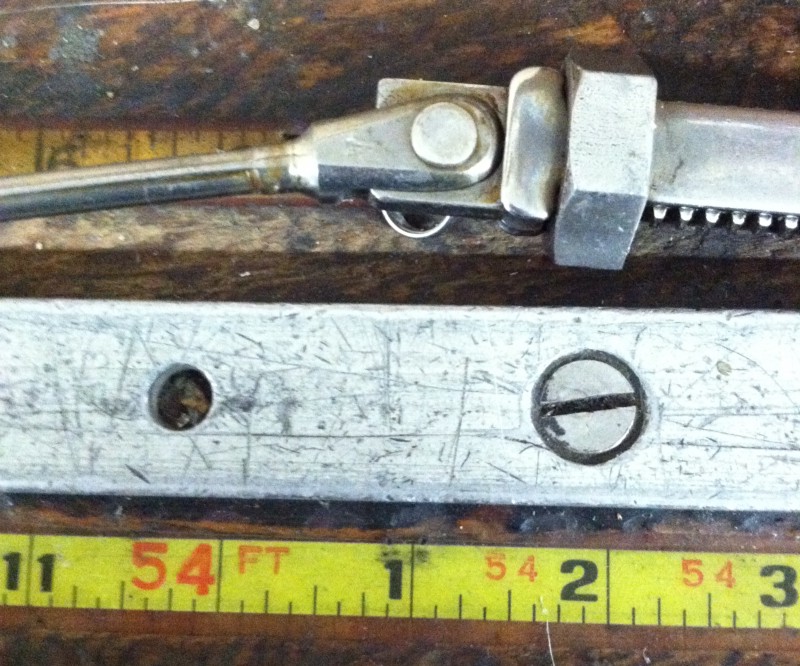
Measuring shrouds at the rigging shop. Since the tape measure started at 40', these shrouds are 14' 1.125". The author prefers 14' 0.75" to get a bit more rake in heavy air.
When you rig up your Stamasters, make sure that the numbers are facing the centerline of the boat so that it's easy to read them when adjusting the shrouds on the water.
Zip-Tie the Plates
Put one zip tie on the base of each Stamaster, to hold the two metal slats tight together (but not so tight that you cannot crank the Stamaster down to zero — max rake, around 20' 9" from masthead to aft corner of deck). This provides a couple of benefits:
- Consistency: when determining your rig settings, you eliminate any variance due to one Stamaster having a "wide stance" and the other a "narrow stance."
- Durability: when it's windy and you have a lot of rig tension (around 900 pounds), keeping the slats together means less torque on the pin holding the Stamasters to the hull, and thus a lower likelihood of breaking the pin.
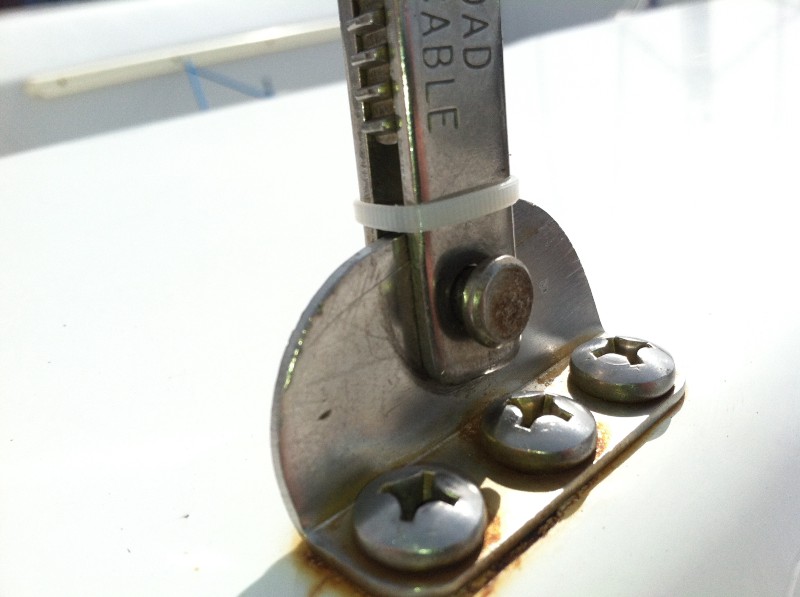
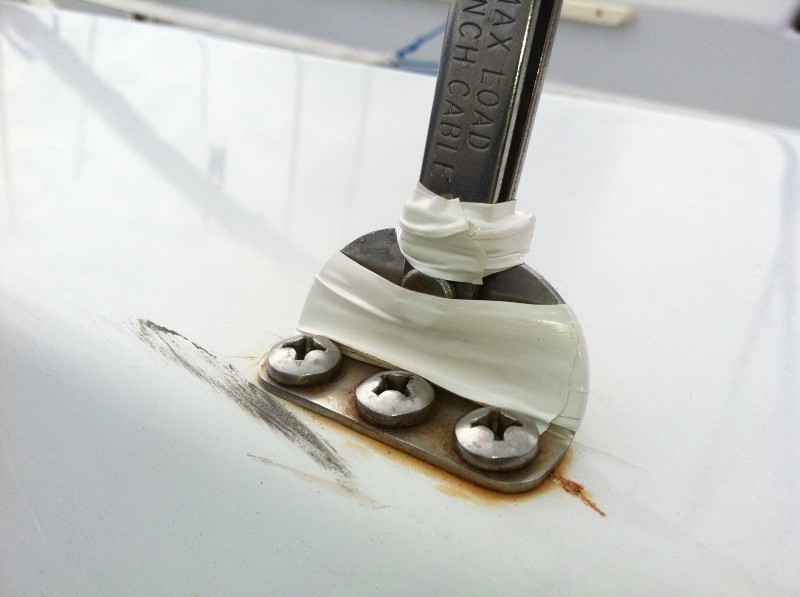
Once the shrouds are set up, tape up the pins and ring dings with electrical tape.
Speed Up Your Adjustments
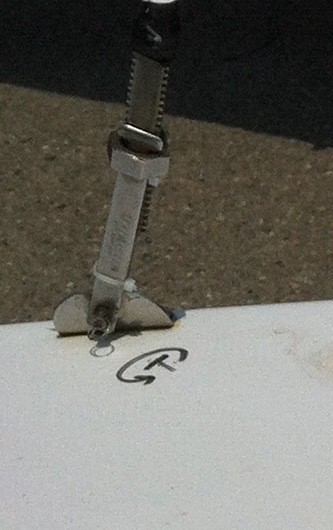
A small but important finishing touch is to mark the deck, just aft of each shroud adjuster, showing which direction (clockwise or counter-clockwise) tightens the shroud. It's also good to spray the shroud threads with teflon lubricant periodically so they're easier and quicker to turn.
These last two steps matter because often you only have a short time between races to adjust your shrouds. Having the right adjustment can make the difference between flying off the start line and getting blown back. You and your partner need to be like a NASCAR pit crew to make adjustments. Remember: in a three-minute sequence you're not allowed to adjust your shrouds after two minutes; in a five-minute sequence, no adjustments after four minutes.
Time how long it takes to make your shroud adjustments and keep making refinements to speed things up. Try to get it down to 60 seconds.
Lastly, be sure you understand which settings are rake forward and which are rake back. The higher the numbers, the more rake forward — better for light air since it provides more power. For heavy air you want lower numbers to shed excess power. Seems obvious, but get it backwards and it's not fun sailing in light air with a raked-back rig.
Originally published on Medium